
Parcel vs. Pallet (LTL) Shipping: Which to Use and When
Key differences between shipping palletized (LTL) freight and shipping parcels
Parcel shipping moves individual boxes through courier networks built for many small stops each day. Packages are scanned often and handled on conveyors and by hand, which is great for one-off orders and small, time-sensitive items headed to lots of different addresses.
Palletized LTL shipments contain multiple boxes/pieces per pallet. All the boxes/pieces are shipped to the same consignee. This pallet rides a hub-and-spoke terminal network: it’s picked up locally, taken to the origin terminal, moved through one or more regional hubs to the destination terminal, and then sent out for final-mile delivery. Carriers move the load as a single unit, which generally means fewer manual touches and better protection for heavier or bulkier freight.
Key differences between palletized (LTL) freight and parcel shipping
1) Size and weight limits of pallets vs. parcels
Parcel shipping: For individual boxes up to about 150 lb and roughly 165 inches in total size (length plus girth). Carriers often charge extra once a package gets close to these limits, even if it doesn’t officially go over.
LTL (pallet) shipping: Designed for 1-10 pallets (larger palletized shipments that are too big or heavy for parcel carriers).
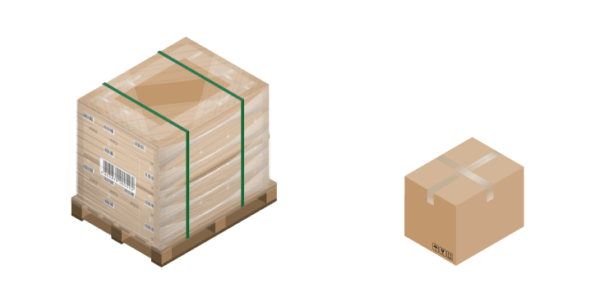
2) How parcels and pallets are shipped
Parcel shipping: Packages move through dense delivery routes with many daily stops and frequent tracking scans.
LTL (pallet) shipping: Palletized freight moves through a network of terminals. It’s picked up locally and taken to the origin terminal where it’s sorted for further transport. It’s moved through one or more regional hubs, then delivered from the destination terminal to the receiver. The fact that it takes multiple stops from pickup to delivery is one of several reasons why delivery times are estimated, not exact.
3) How pricing works & cost differences
Parcel shipping: Based mostly on package weight, size, and shipping zone, with possible surcharges for oversize or extra handling. Parcel shipping is typically the cheapest option if you’re shipping smaller packages.
LTL (pallet) shipping: Based on several factors, including lane (origin/destination), weight, size, and a freight class (USA only) rating that reflects how easy the freight is to handle, store, and transport. Accurate measurements and packaging help you avoid extra fees for re-weighs or re-classifications. Combining boxes on a pallet and shipping as LTL usually lowers the total cost per item and makes unloading easier.
4) Handling, packaging, and the risk of damage
Parcel shipping: Packages move on conveyor belts and are handled manually, so they should be packed to survive drops or vibration (inside of strong boxes, with good padding, and quality tape). Each box is handled many times, which increases the chance of damage.
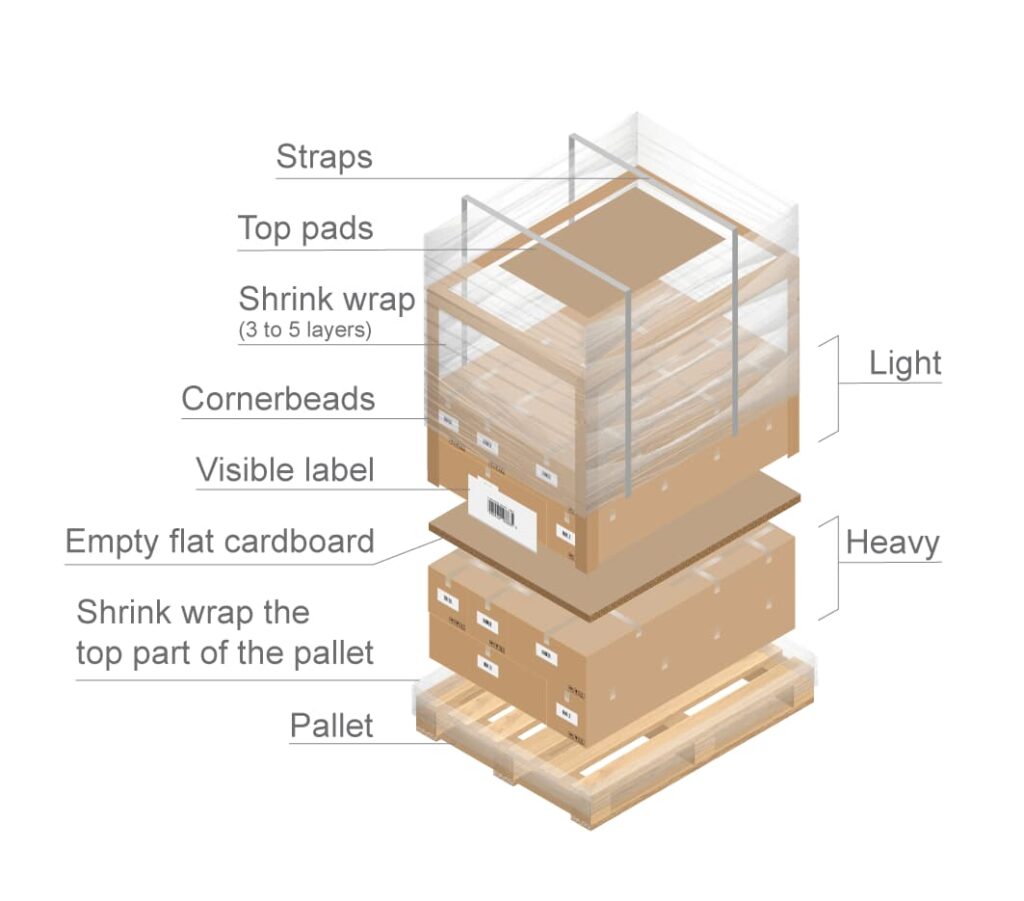
LTL (pallet) shipping: Shipments should be palletized or crated. Stack boxes evenly, use corner boards, straps, and stretch wrap, and add clear labels to both individual boxes and the pallet itself. Good palletizing reduces damage and helps the shipment move smoothly between terminals. Once secured on a pallet, freight is moved mostly by forklifts and pallet jacks, which means fewer touches and lower risk if it’s packaged well.
5) Speed, service and tracking differences
Parcel shipping: Runs on regular, daily delivery routes and offers guaranteed delivery dates. It also provides more frequent tracking updates as each package moves through sorting facilities and vehicles.
LTL (pallet) shipping: Takes longer because of the transfer process between terminals. Guaranteed delivery may be available for an extra fee, but it’s only worth it if your shipment is time-sensitive. Tracking updates appear at key points, such as when the shipment moves between terminals or goes out for delivery, rather than at every stop.
See this guide for more information on LTL shipment tracking.
When to choose parcel shipping
Pick parcel shipping if you’re sending small boxes, and when you need tight delivery windows.
Parcel shipping works best when each box is within carrier limits (typically up to 150 lb and no more than 165 inches in total (length + girth)), depending on the service.
When to choose palletized LTL shipping
Choose LTL if you’re shipping several boxes to the same location, handling bulky or oddly-shaped freight, or if you want to lower the risk of damage by securing everything on a single pallet.
LTL shipping is ideal if your shipment weighs more than 150 lbs, or if it’s too bulky for parcel shipping.
LTL vs. parcel shipping FAQ
Is LTL shipping safer than parcel shipping?
Usually, yes – especially for heavier or bulkier items. When your boxes are stacked and strapped onto a pallet, they stay together and are handled by forklifts instead of being tossed around on conveyor belts. That means fewer touches and less chance of damage.
When should I switch from parcel to LTL?
If any single box weighs more than about 150 lb, or you’re sending several boxes to the same address, check freight quotes for both options. You’ll often find palletized LTL shipping cheaper and easier to receive than sending multiple heavy parcels.
Should I put a few boxes on a pallet?
Yes, if the total weight or size is significant. One shrink-wrapped pallet is easier for forklifts to move and much less likely to get separated or damaged, compared to several loose boxes. Carriers may refuse to ship your cargo if it isn’t properly packaged and palletized.
What’s better for fragile items, pallet shipping or parcel shipping?
For small, delicate consumer goods, parcel shipping with strong packing and insurance is fine. For larger or heavier fragile items, use LTL and secure them in a crate or tightly wrapped pallet, as there’s less manual handling that way.
Is LTL shipping slower than parcel shipping?
Usually, yes. Parcel trucks run direct routes every day, while LTL shipments move through several terminals. If timing is critical, you can choose a Guaranteed LTL service for a set delivery date.
Freightera’s quick solution for larger shipments
If your shipment is getting too big or heavy for parcel carriers, you can get instant LTL freight quotes on Freightera, compare rates from multiple carriers (including low-emission options), and book online in minutes.
For smaller, single-box shipments, parcel shipping is still your best option. But once a package gets close to 150 lb or you’re sending several boxes to the same address, it usually makes sense to combine them on a pallet and ship via LTL for a safer and more cost-effective trip.