
Residential Locations in Freight Shipping
How to ship freight to a residence, and why carriers treat residential locations differently from commercial locations
In freight shipping, anything going to a home address is treated as a residential location, even if you run a business there.
Carriers care less about what you do at the location and more about where it is and how a truck can get in and out. Narrow streets, driveways, and pedestrian zones usually make residential locations very different from standard commercial locations.
This article explains what “residential” means in practice, what to expect on pickup and delivery day, and how to quote correctly so you don’t get surprise charges.
What counts as a residential location?
Carriers normally treat your stop as residential if it’s located in a house or an apartment, or if it’s a business located in a residentially-zoned area.
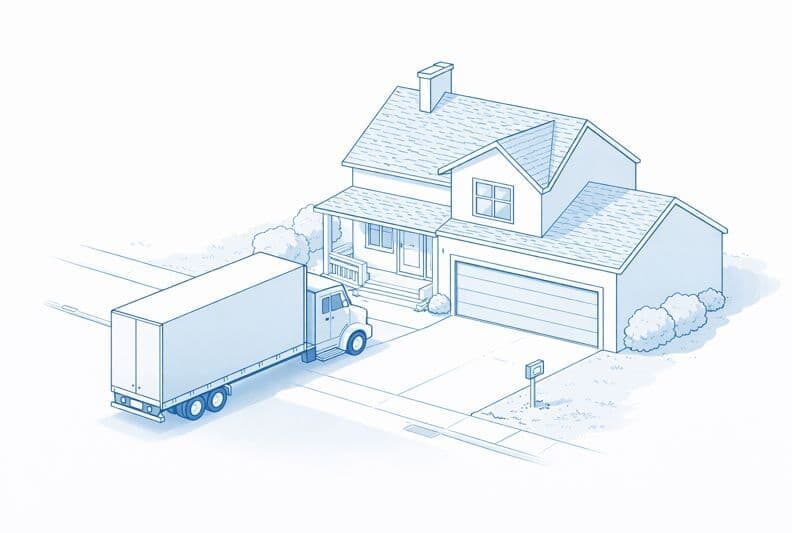
You might have a full warehouse in your garage, but if the address is in a residential zone, most carriers will still bill it as residential service.
Why carriers do this:
- Streets are often narrower and harder for big trucks to turn on.
- There’s more pedestrian traffic, parked cars, and local restrictions.
- A 53′ trailer may not fit safely, so they may have to send a smaller truck (a straight truck).
- They usually need extra time and a liftgate to move freight to and from ground level.
Checklist: How to avoid extra fees for residential pickups & deliveries
At quote time:
- Mark the location as Residential, and check off Liftgate if there’s no dock or forklift.
- If the carrier doesn’t serve home addresses, you can drop off your freight at the carrier terminal, or arrange the pickup/delivery to a nearby business with a dock.
Before pickup or delivery:
- Expect a time window (AM/PM), not an exact hour.
- Provide gate codes, call-ahead instructions, or special directions while booking.
- Confirm that the driver has safe, direct access to the curb or driveway.
- Clear space for the truck to park and unload.
- Ensure someone is on-site to answer calls, direct the driver, sign paperwork, and move freight inside.
Keep in mind:
- Inside delivery, and driver assistance are extra services and billed separately. If you need these services, make sure to request them while quoting.
Residential freight shipping FAQ
My business runs from my house. Why am I paying residential fees?
Carriers bill based on the location type. If the address is in a residential area, they treat it as residential because of access limits, additional labor, safety, and extra time on site.
Do I really need a liftgate at my house?
If you don’t have a dock or forklift, then yes, unless each piece is light enough to load/unload safely by hand (handbombing). Most pallets and heavy crates need a liftgate. Make sure to quote for and book a truck that has a liftgate, prior to shipping.
Will the driver bring the pallet into my garage or house?
Standard service is to the curbside/driveway. Some drivers may help a little as a courtesy, but anything beyond ground-level delivery is usually an extra service and not always available.
Why can’t the freight carriers give me an exact delivery time?
Carriers generally operate in time windows, not exact time slots, for both business and residential locations. Residential stops are additionally encumbered with traffic, other deliveries, and delays. That’s why carriers offer a time window instead of a precise hour.
Can I avoid residential charges by meeting the truck somewhere else?
Sometimes. You can ship your cargo from or to a business with a dock (with their permission) or arrange a terminal pickup/delivery if available. It’s often cheaper and easier, but you’ll need to arrange a way to move the freight there.
Shipping to a home address?
Sign up on Freightera, mark your location as ‘residential’ on the quoting page, add a liftgate accessorial, get quotes and book your freight shipments in seconds. As long as you select all of the required services beforehand, you’ll see all-inclusive freight rates, with no surprise charges.