
Shipping from/to a Carrier Terminal
A practical guide to shipping freight from or to a carrier terminal
When you bring the freight directly to the carrier’s terminal and/or collect it there, instead of having the truck come to your site, that’s terminal drop-off and pick-up in freight shipping.
For the right shipper, this can be one of the simplest, lowest-friction ways to move freight: you avoid on-site loading headaches, reduce the chance of missed attempts, and often pay fewer accessorial charges because the carrier treats it as terminal-to-terminal, business-to-business service.
This guide explains when choosing the terminal service makes sense, and how it works in practice.
What terminal drop-off and pick-up actually mean
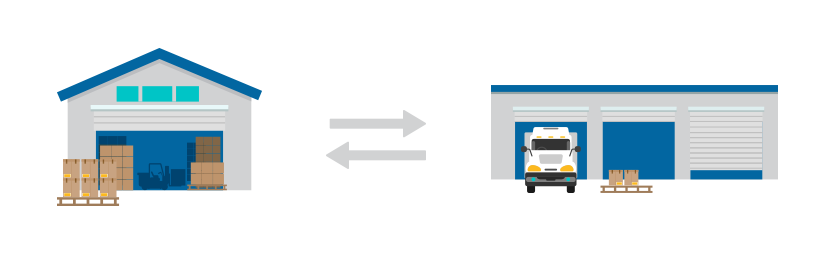
In LTL and pallet shipping, a terminal is the carrier’s local facility where freight is:
- Received from shippers.
- Consolidated onto linehaul trailers.
- Broken down and sorted for local delivery.
When you choose terminal service, you are replacing the truck’s first and/or last mile with your own transport.
You are responsible for loading/unloading at the terminal (with your own people/equipment or with help you’ve arranged), while the carrier handles the linehaul and terminal-to-terminal movement in between.
When to choose the terminal service
Terminal drop-off and/or pick-up is often a good fit when:
- Your location does not have a dock, a forklift, and you want to avoid special equipment charges.
- You have your own vehicle (or a partner) that can move palletized or crated freight to/from the terminal.
- You want to avoid waiting on-site for a driver and the risk of detention fees.
- Your site is hard for big trucks to access (e.g. with tight streets, low clearances).
- You are shipping to or from residential or limited access locations and want to avoid those accessorials.
In short, if it is easy for you to get to a terminal, but hard for a 53-foot truck to get to your location, terminal service can be a smart choice.
How terminal drop-off works (pickup/origin side)
When you use terminal drop-off, you are handling the first leg yourself and letting the carrier take it from there. A basic flow looks like this:
1) Book the shipment as terminal-origin
When you get your quote, select or request terminal drop-off instead of “pickup at my address.”
After booking the shipment, you will receive terminal details (address, hours, and any special instructions).
2) Package and label your freight
Package according to LTL packaging standards (palletize or crate whenever possible).
Apply shipping labels so they match your BOL (piece count, weights, shipper and consignee addresses).
3) Bring the freight to the terminal
Use your own truck, van, or pickup equipped to move the freight safely.
Follow any appointment rules or cutoff times the carrier specifies for same-day processing.
4) Check in at the terminal
Provide the BOL and reference/PRO number at the office or receiving window.
Terminal staff will direct you to the right dock or receiving bay.
5) Unload the freight
In some cases, terminal staff will use their forklift to unload from your vehicle.
In others, you may be expected to unload by hand or use your own equipment. Always clarify this ahead of time with your shipping provider.
Once received and checked in, your freight enters the normal LTL network and moves toward the destination terminal.
How terminal pick-up works (delivery/destination side)
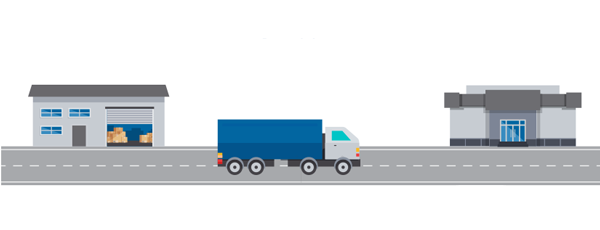
On the delivery side, terminal pick-up shifts the last leg of the journey to your consignee.
1) Carrier notifies the consignee
Once freight arrives and is ready, your consignee will be notified with the terminal address, hours, and any reference numbers.
2) Consignee prepares a vehicle and equipment
They bring a suitable vehicle (from a small truck to a pickup with ramp, depending on freight size/weight).
If the freight is palletized, they may also need a pallet jack or forklift on their side.
3) Check in at the terminal
Provide ID and the shipment reference/PRO/BOL number.
Terminal staff guide them to the correct loading area.
4) Load the freight
Terminal staff may load the vehicle with their forklift, or the consignee may participate, depending on carrier policy.
5) Sign for the freight
The consignee signs the delivery receipt (POD), notes any visible damage or shortages, and leaves with the shipment.
Terminal pick-up lets consignees collect freight on their own schedule within terminal working hours, without needing to coordinate a truck arrival window at their site.
What to bring to the terminal, and how to prepare
Being prepared saves time and avoids repeat trips. For both drop-off and pick-up, you will typically need:
- The BOL and/or PRO number.
- Valid ID for whoever is dropping off or collecting the freight.
- A vehicle appropriate for the size, weight, and packaging of the freight.
- Any equipment you need on your side (pallet jack, dolly, straps, etc.).
Before you go, make sure to:
- Confirm terminal hours and any cutoff times for same-day processing.
- Ask whether the terminal will load/unload your vehicle or expects you to do it.
- Check whether appointments are required for larger or special-handling shipments.
Cost, timing, and accessorials
Terminal service can be a powerful tool for controlling costs and avoiding surprises.
It can help you avoid pickup/delivery-related accessorials. There are no residential, limited access, or inside-delivery fees when you move freight terminal-to-terminal.
You also reduce the risk of missed attempts and redelivery charges. If a truck comes to a site that can’t load/unload, you pay for the attempt. At a terminal, that risk goes away because you bring the freight on your schedule. You are not racing the clock while a driver waits and the meter runs.
On the other hand, you are taking on the cost and time of moving freight to/from the terminal yourself, and the responsibility for safe loading/unloading.
You also need to coordinate with terminal hours, and be aware of storage rules and limitations (most terminals will charge you if freight stays there too long).
For many shippers and consignees, especially those without loading/unloading equipment on site, this trade-off is worth it.
When terminal service might not be the right choice
Terminal-to-terminal is not always the right answer. It may not be a good fit if you cannot safely transport the freight to/from the terminal yourself, if you do not have a vehicle that can handle palletized or large freight, or if the consignee cannot easily reach the terminal (for example, because of a long distance, limited transportation options).
If you need time-specific delivery to a job site or event, then a white-glove service or dedicated truck is a better match than shipping to a terminal. In those cases, requesting pickup and delivery with the right equipment is your best option.
Terminal drop-off and pick-up in freight shipping FAQ
Is shipping terminal-to-terminal cheaper than door-to-door?
Often yes. You can avoid many site-related accessorials (residential, limited access, liftgate, inside delivery) when you ship terminal-to-terminal. The exact savings depend on your lanes and carriers, but it is usually more economical for locations without docks or forklifts.
Do I need an appointment to drop off or pick up at a terminal?
Some terminals accept walk-ins during business hours; others prefer or require appointments, or at least a heads-up for larger shipments or busy periods. Always check your paperwork or confirm with your shipping provider ahead of time.
Will terminal staff load or unload my vehicle?
Many terminals will load your vehicle with a forklift if your freight is palletized and your vehicle can be accessed safely. In rarer cases, they may expect you to hand unload or use your own equipment. Policies vary, so confirm this ahead of time.
Can I still be charged for storage if I don’t pick up right away?
Yes. Terminals are not long-term storage facilities. Carriers may charge storage or daily holding fees if freight sits at the terminal beyond a certain grace period. Aim to collect freight as soon as it is ready.
Can I use terminal drop-off for residential shipments?
Yes. A common pattern is: you drop the freight off at the origin terminal, and the carrier delivers to a residential consignee with the appropriate accessorials (for example, liftgate + residential).
Ship more, stress less
If you are not sure whether terminal drop-off or pick-up makes sense for your shipment – or how it compares to liftgate, driver assistance, or white-glove service – you can flag that when you request a Freightera quote. Our team can help you choose the quote that keeps your costs predictable and your shipping as stress-free as possible.