
Loading Docks in Freight Shipping
What qualifies as a loading dock, and how shipping freight dock-to-dock can save you time and money
Loading docks are the standard way to load and unload palletized freight. When a location has a truck-height dock, loading and unloading is usually faster, safer, and less expensive than any alternative.
Most dock-to-dock shipments follow the same basic pattern: the trailer backs up to the dock, the driver opens the doors, and your team moves pallets directly between the warehouse floor and the trailer. There is no liftgate, no curbside staging, and no time spent figuring out how to get freight on and off the truck.
This article explains what counts as a loading dock, why carriers prefer dock-to-dock shipping, how to know if you can honestly book “dock” on your quote to prepare your dock so that you avoid missed attempts and wait fees.
What is a loading dock?
A loading dock is a raised, fixed platform designed specifically for trucks, allowing trailers to back in safely for loading and unloading. It is set close to standard trailer height, typically around 48–52 inches, so freight can move directly between the building and the trailer floor.
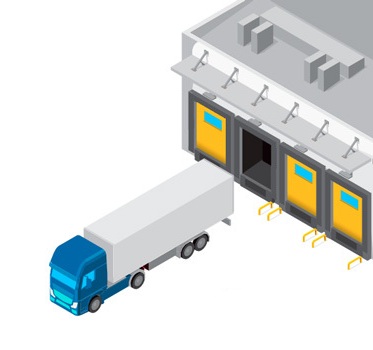
Loading docks vary in type and quality. A proper loading dock is also equipped with one or more dock doors, giving trailers a clear, secure point to back in and transfer palletized freight efficiently. Meanwhile, an older or more basic dock may just be a raised concrete platform.
Most loading docks also include a dock leveler or dock plate to bridge the gap between the warehouse floor and the trailer bed, allowing forklifts and pallet jacks to move freight smoothly and safely.
Inside the building, there is usually enough flat, open space to stage pallets near the dock door, so freight can be loaded or unloaded without congestion or delays.
Well-designed docks also have clearly marked edges and protective bumpers, which help guide trailers into position and protect both the building and the truck during contact.
Types of loading docks in freight shipping
Not all loading docks are the same, and knowing the differences can help you anticipate site capabilities and prepare your crew and equipment accordingly.
1) Flush (standard) loading dock
This is the most common and space-efficient dock. The dock opening is set into the building at truck-height so a trailer can back straight in and freight moves directly between the trailer floor and warehouse using forklifts or pallet jacks.
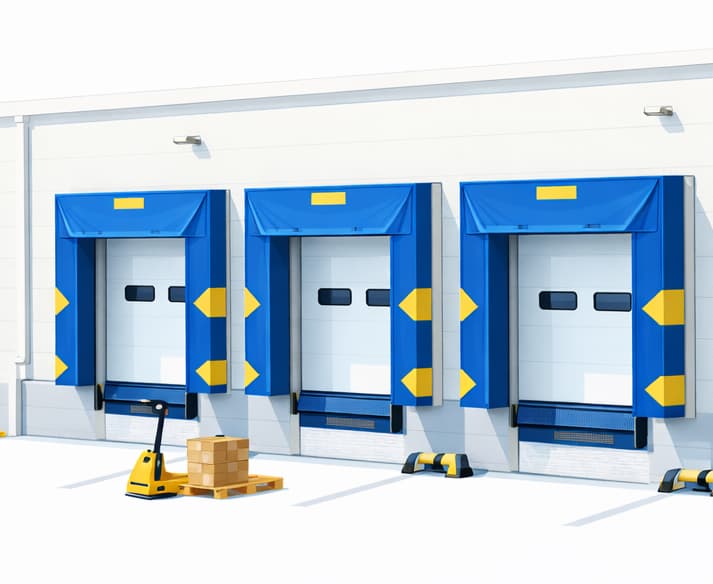
Most LTL and FTL dock setups are this type.
2) Sawtooth loading dock (angled dock doors)
Sawtooth docks are arranged at an angle to the building, allowing multiple trucks to fit in a tighter space than straight-in positions would permit.
Because the approach isn’t directly perpendicular, it’s important to confirm maneuvering space and whether the carrier prefers certain truck types for that site.
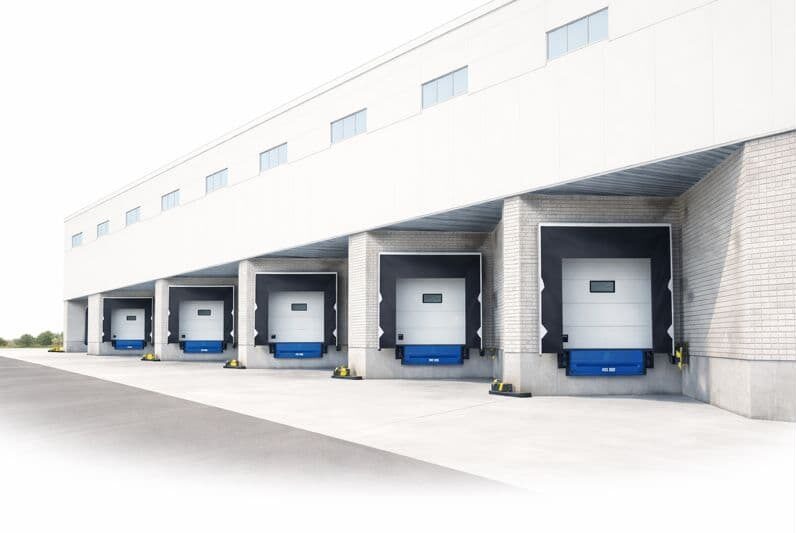
3) Open loading dock
An open dock protrudes from the building and is more exposed to the elements. Some open docks have a roof overhead, but they generally offer less weather protection than flush or enclosed docks.
These can be useful where yard layout or traffic patterns make in-line docks impractical.
4) Enclosed (closed) loading dock
Enclosed docks are fully covered and protected from weather. They’re less common but provide the most sheltered loading environment, which can help protect freight and staff when weather is a concern.
Why docks are the fastest loading/unloading option for pallet freight
A good loading dock does three big things for you:
- It speeds up loading and unloading: Forklifts and pallet jacks can move full pallets in just a few passes, so trucks spend less time on site.
- It improves safety: There is no need to balance heavy pallets on a liftgate or hand-unload box by box. Freight stays at pallet level, which reduces drops, slips, and strain on workers.
- It reduces accessorials and surprises: Dock-to-dock is the industry default for LTL pricing. When both shipper and consignee have usable docks, you usually avoid liftgate charges and many “special handling” fees.
If both ends of the shipment truly have docks, business-to-business, dock-to-dock is almost always the simplest and most economical setup.
When you can honestly book “dock to dock”
Carriers assume certain things when you choose “dock” on a quote. As a rule of thumb, you can book dock-to-dock if:
- The truck can back up to the building in a straight line or at a reasonable angle.
- The dock height matches standard trailers, or you have a dock leveler/plate that can safely bridge the gap.
- You have loading equipment on site (a forklift or pallet jack) and someone who can operate it.
- You have staff available during normal business hours to load and unload the truck.
- The freight is palletized or crated, not loose pieces that must be carried by hand.
If you only have a driveway, parking lot, or ground-level door without a raised platform, that location is not a dock. In those cases you will typically need a liftgate, hand unloading, a portable ramp, or a terminal drop-off/pickup instead.
If you are not sure:
- Check the address on Google Maps/Street View to see if the building clearly shows dock doors.
- Ask the site contact directly: “Do you have a truck-height dock where a 53′ trailer can back in, or a forklift?”
Being accurate here matters. If the driver arrives and cannot load or unload as booked, you can be charged for a liftgate use, missed attempt and pickup/delivery reattempt.
How to prepare your dock for pickup or delivery
Even with a good dock, most delays come from sites not being ready when the truck arrives. A few simple steps prevent that.
1) Stage freight before the truck arrives
- Have your pallets fully packaged, shrink-wrapped, strapped, and labeled in advance.
- Stage them near the dock door you plan to use, but not blocking the opening.
2) Clear the approach and dock area
- Make sure parking lots, driveways, and the dock are clear enough for a 48′ or 53′ trailer to maneuver.
- Remove loose pallets, trash, and debris from in front of the dock doors.
- In winter, clear snow and ice so the truck can back in safely.
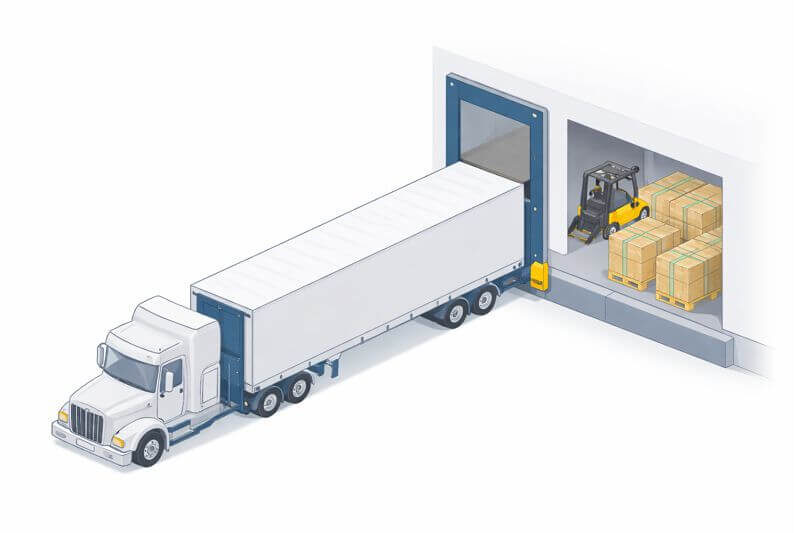
3) Coordinate timing with your warehouse schedule
- Have staff and equipment free during the expected window, not at lunch or in another area.
- For heavy volumes or multiple pallets, allow enough time so you are not rushed and the driver does not hit detention.
A little preparation goes a long way toward smooth, stress-free pickups and deliveries.
Loading docks in freight shipping FAQ
What counts as a “dock” for LTL quoting?
A dock is a raised, truck-height platform where a trailer can back in and your team can move pallets directly between the building and the trailer using a forklift or pallet jack. Ground-level doors, curbs, or driveways alone are not docks.
Can I still say that my location has a “dock” if I have a forklift but no raised platform?
Usually, yes. If the site can safely load and unload from the side or rear of the trailer using a forklift, some shippers book as “dock” for quoting simplicity. However, carriers still expect safe access and realistic loading times, and in rare cases, certain trailers or carriers may require a true dock. When in doubt, describe the site accurately to your freight provider.
Who is responsible for loading and unloading at the dock?
For standard LTL dock-to-dock service, shippers and consignees are responsible for loading and unloading. The driver positions the trailer and opens the doors; your team moves freight on and off using your equipment, unless you have specifically booked extra services (such as driver assistance or inside delivery).
What if my dock is slightly higher or lower than the trailer?
That is what dock levelers or dock plates are for. As long as the height difference is reasonable and you are using properly rated equipment, you can bridge the gap and load or unload safely. If the height difference is extreme or the dock cannot be used safely, you may need another method or different equipment.