
Accessorials and Value-Added Services in Freight Shipping
Which accessorials and services to select upfront (while quoting) to avoid surprise fees
In freight shipping, accessorials (also called value-added services) are any services beyond a standard commercial, dock-to-dock shipping during normal business hours.
They include services like liftgates, residential delivery, limited access locations, appointments, protect-from-freeze, driver assist, trade show handling, and many more.
These services are essential when the real-world conditions at pickup or delivery are not “standard.” When you select them upfront (during quoting and booking), carriers can send the right type of truck, plan realistic schedules, and quote you accurately. When they are missed, the same services often show up later as extra charges at higher tariff rates.
This guide explains the most common accessorials in freight shipping by category, how service levels interact with accessorials, and what to check at quote time so your invoice matches your quote.
What the standard freight shipment includes
By default, a standard freight quote assumes:
- Commercial pickup and delivery at business locations.
- Dock or forklift available at both ends so pallets can be moved directly between the trailer and the building.
- Normal business hours with no special timing restrictions.
- Curb or dock service only, not inside delivery.
- No special handling, paperwork, or access restrictions.
Anything outside these defaults qualifies as an accessorial or a value-added service and has to be declared during quoting.
On Freightera, accessorials appear as simple checkboxes and items in a drop-down menu on the quoting page.
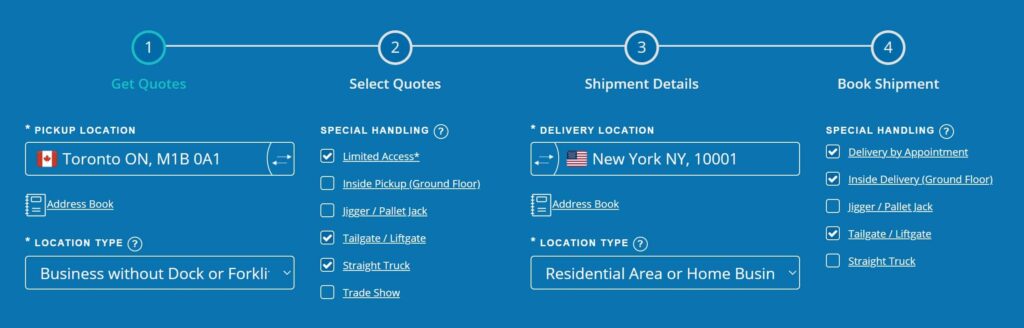
Selecting the correct ones ensures your rate is truly all-inclusive, with Freightera’s Rate Defense™ being your safety net if a carrier tries to add an incorrect charge later.
Location-based services
Many accessorials are driven by where the truck is going rather than what you are shipping.
You could be shipping the same freight to two different locations, and these two shipments will be priced very differently if one is a house, a storage yard, or a secure facility instead of a standard warehouse. Location-based services capture this extra time, complexity, and access risk so carriers can plan the right equipment and schedule for your shipment.
Residential pickup or delivery
Residential deliveries cover homes, home-based businesses, and businesses located in residentially zoned areas.
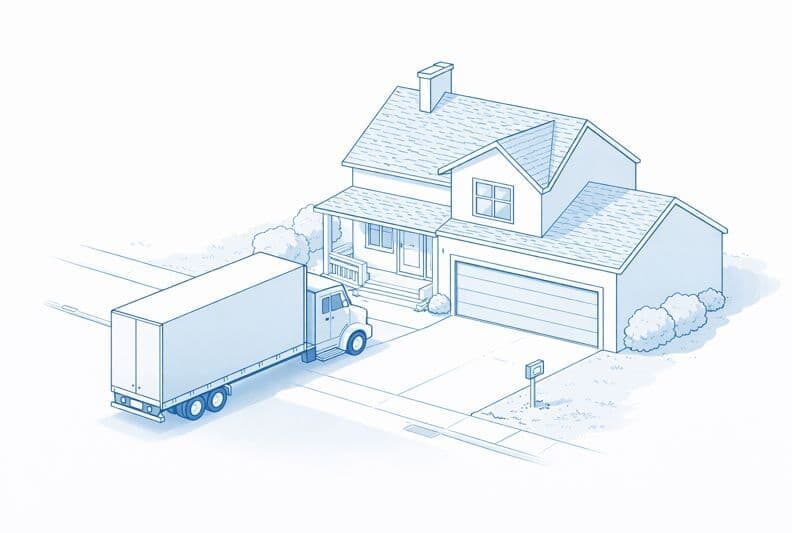
These locations often require smaller trucks, liftgates to reach ground level, and more time on site because of tighter streets, driveways, and pedestrian traffic.
Limited access locations
Limited access locations are sites that are not open to the general public or have specific access restrictions. Examples include:
- Airports, seaports/ports, rail yards, marinas, and piers/wharfs;
- Hospitals, clinics, nursing homes/assisted living facilities, animal hospitals, and other medical sites;
- Schools, universities, daycares, preschool facilities, and public libraries;
- Churches, temples, cemeteries, and funeral homes;
- Military bases/installations, prisons, police and fire stations, and other sites with extensive security processes;
- Construction sites, mines, quarries, and other job sites (including locations that require non-standard equipment);
- Utility and critical infrastructure sites, including power plants, nuclear facilities, and water treatment plants;
- Farms, ranches, and other remote rural facilities;
- Parks (including state/national parks), fairgrounds, convention and expo centers, amusement parks, golf courses, country clubs, and resorts (including ski resorts);
- Storage units/mini storage facilities, shopping malls, casinos, and other commercial establishments not open to the general public during normal business hours (including some warehouses/distribution centers such as Amazon locations), plus banks and post offices/USPS processing centers;
- Lodging facilities, restaurants, gas stations, car washes, and car dealerships.
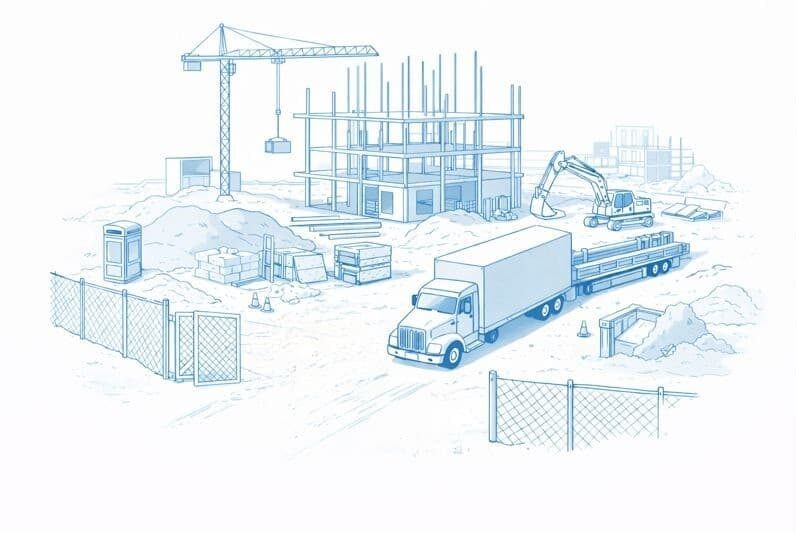
These locations typically require extra time, appointments, and sometimes security checks. Carriers charge for the additional handling and complexity involved.
Trade shows and events
Convention centers and expo halls often have their own freight procedures. Shipping to trade shows often includes:
- Marshaling yard staging before the freight is brought to the hall
- Strict check-in and check-out times
- Booth numbers and contact details on the bill of lading (BOL)
- Special documentation and labels
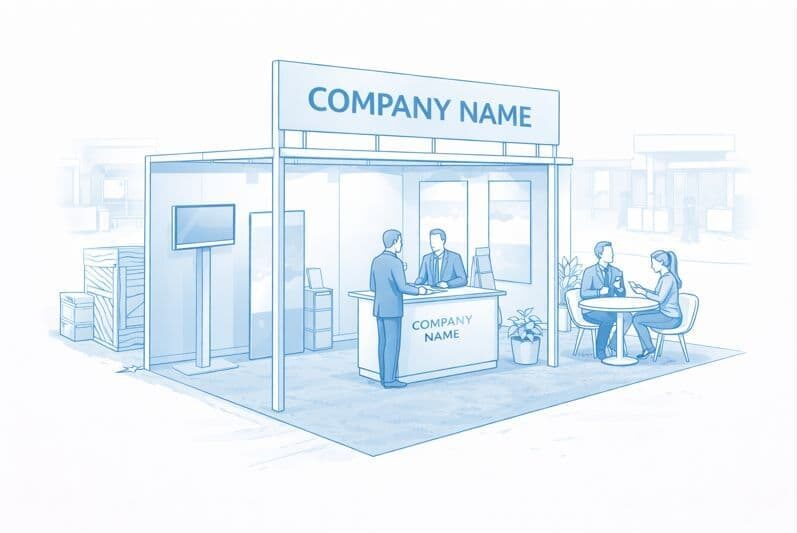
Because of the coordination involved, trade shows are treated as a distinct accessorial/value-added service.
Amazon and distribution centers
Amazon facilities, and major distribution centers usually have very specific requirements. You can expect:
- Portal-booked appointments and time windows
- Mandatory reference numbers and purchase order details
- Longer dwell times at the dock
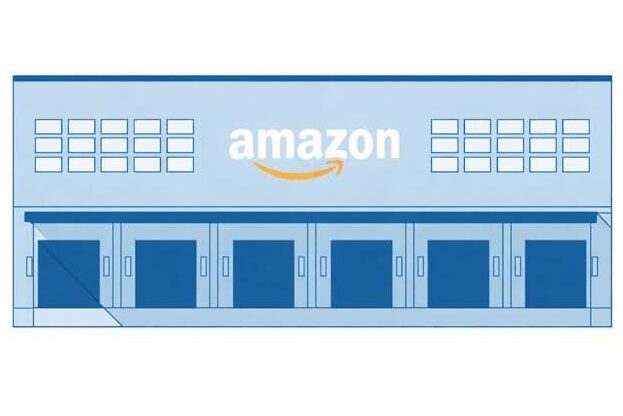
These conditions increase planning and on-site time, so carriers charge for them as additional services.
Equipment-based services
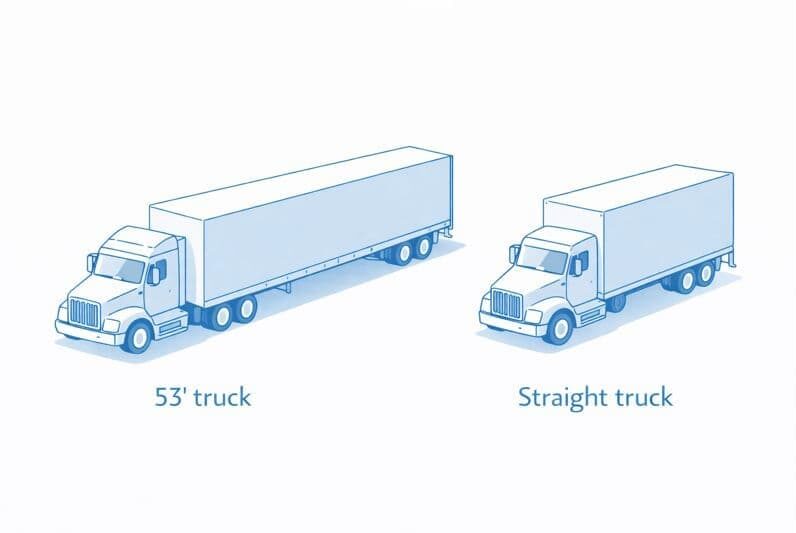
Some accessorials are about what kind of truck or gear the carrier has to dispatch. If the standard 53 ft. trailer and dock setup will not work, the carrier needs different equipment, which affects both planning and price. Equipment-based services make sure the truck that arrives can physically load and unload your freight safely.
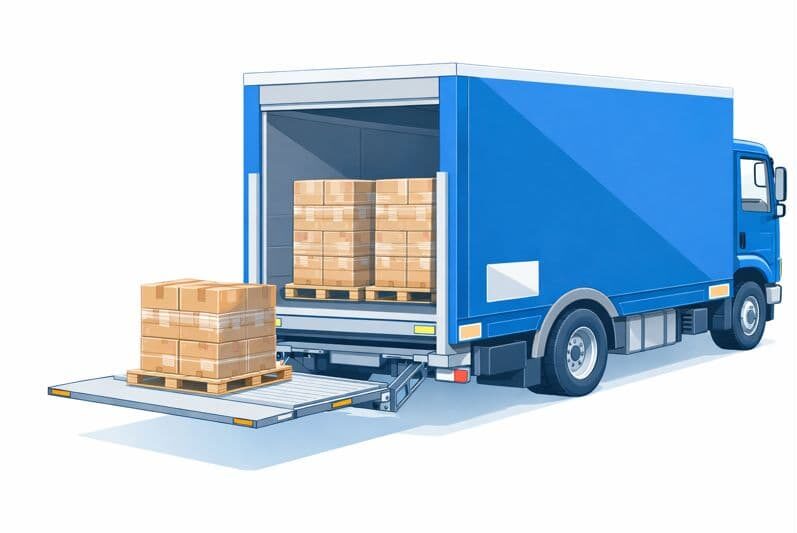
Liftgate or tailgate
A liftgate is needed when there is no dock or forklift at pickup or delivery, and freight must be raised or lowered safely between trailer height and ground level. If pallets cannot be handled by a dock or forklift, a liftgate is almost always required and must be selected while quoting.
Straight or small truck
Straight trucks or smaller vehicles are used when a full-size 53 ft. trailer cannot safely reach the site because of tight turns, low clearances, weight limits, or narrow roads. Selecting this option ensures the carrier sends equipment that can actually access the location. This service is often required for residential or downtown deliveries.
Handling-based services
Handling-related accessorials come into play when the driver is expected to do more than simply back into the dock and watch your team load or unload. Any service that requires extra physical labor, moving freight beyond the dock line, or special handling inside the building is usually billed as a handling-based accessorial.
Inside delivery and driver assist
Inside delivery and driver assistance cover any work beyond placing freight at the curb, driveway, or dock threshold. They may apply when:
- Freight needs to be moved beyond the first door or into a specific room.
- Extra driver labor is required to move items over long distances, up ramps, or through corridors.
Keep in mind that even with inside delivery selected, the driver will never bring your cargo to another floor other than ground-level.
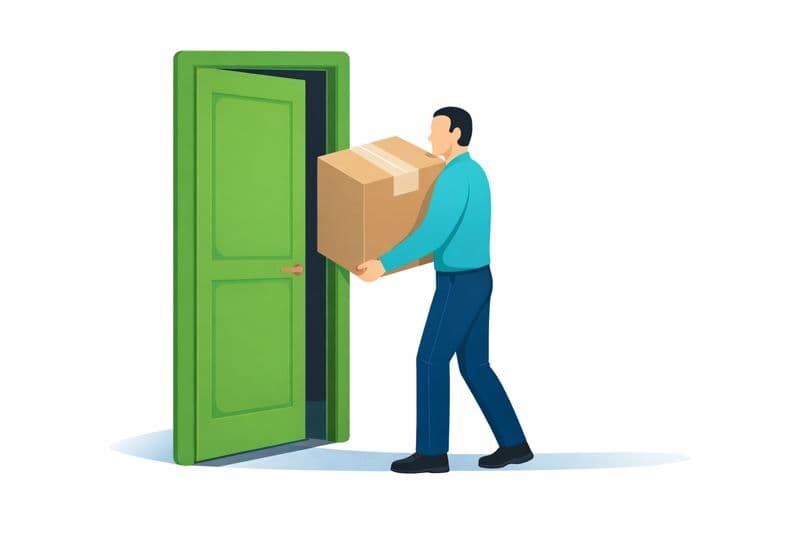
Because this work goes beyond standard curbside or dock service, it is billed as an accessorial and needs to be requested in advance.
Timing and scheduling services
When freight must arrive within a specific window, be coordinated with tight receiving schedules, or move outside normal business hours, timing and scheduling accessorials help carriers plan the route and staff so those commitments can realistically be met.
Appointment delivery
Appointment delivery means the carrier delivers within a scheduled time window rather than on a standard “business day” basis. This is common at residences, distribution centers, and limited access sites that need controlled traffic and staffing. Usually, with appointments, drivers will need at least a two-hour window to deliver your cargo.
Call-before-delivery or notify
With call-before-delivery or notify services, the carrier contacts the consignee in advance to confirm availability, directions, or special instructions. Drivers are not allowed to use their phones while driving, so in order to call ahead, they have to either stop or contact you while at another location. This reduces missed attempts but adds extra time and coordination, so it is treated as an accessorial (unless the location is a residence; in this case, the call-before is usually included in the residential pickup/delivery fee).
After-hours, weekend, or holiday service
After-hours, weekend, or holiday service covers pickups or deliveries outside normal business operations. These shipments usually require special scheduling and often cost more because they fall outside the carrier’s standard network hours. That means more billable man-hours and coordination.
Guaranteed LTL or expedited services
Guaranteed, expedited, and hot-shot freight services provide a delivery date or time commitment under the carrier’s rules. They shorten transit windows or prioritize your shipment in the network. All relevant accessorials still need to be selected. Guaranteed services increase the odds of your freight arriving on time, but still do not guarantee it due to factors out of the carrier’s control (weather, acts of God, flooding, congestion, etc.).
Condition, risk and compliance services
These accessorials exist to manage what can go wrong with the freight itself: freezing, overheating, regulatory requirements, or added safety risks. When your shipment needs temperature control or falls under stricter rules (like hazmat), carriers use condition, risk, and compliance services to price and handle that added responsibility correctly.
Protect-from-freeze or heated service
Protect-from-freeze or heated service prevents temperature-sensitive goods from freezing in cold weather. Carriers use heated trailers, heated warehouses, or special routing, and charge for the additional risk management and equipment.
Refrigerated or temperature-controlled
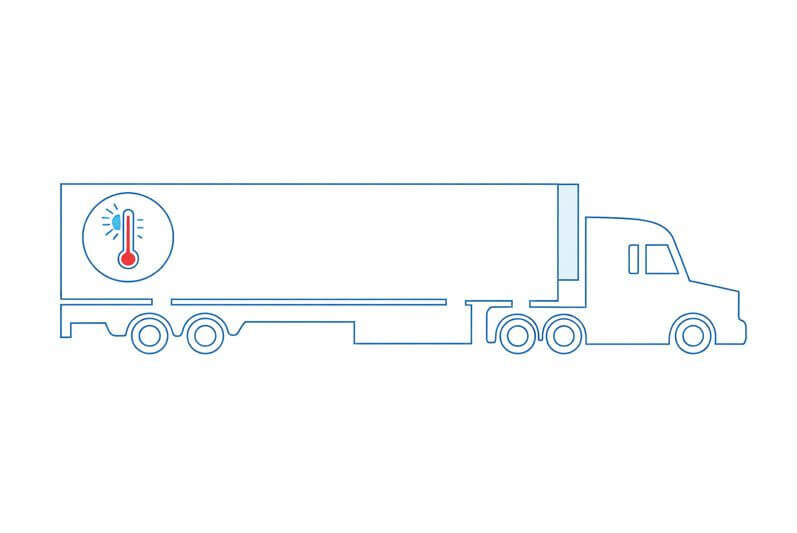
Refrigerated or temperature-controlled service maintains a specific temperature range throughout transit. It is used for food, pharmaceuticals, and other sensitive products, and requires reefer equipment and monitoring.
Hazmat
Hazardous materials (hazmat) shipping requires specialized documentation, trained drivers, and vehicles that meet hazmat regulations. Not every carrier handles hazmat shipments, and those that do will charge extra for the additional compliance requirements and risk.
FTL-specific extras
Full truckload shipments often involve additional routing or securement needs that do not show up in standard LTL. When a truck has to make extra stops or the freight needs tarps, chains, or other specialized securement, these FTL-specific extras are added so the carrier can plan time, routing, and equipment correctly.
Extra stops
Extra stops apply when a truck makes additional pickups or deliveries on the same run. Each extra stop adds time and mileage, so carriers charge for this as an accessorial.
Tarping and extra securement
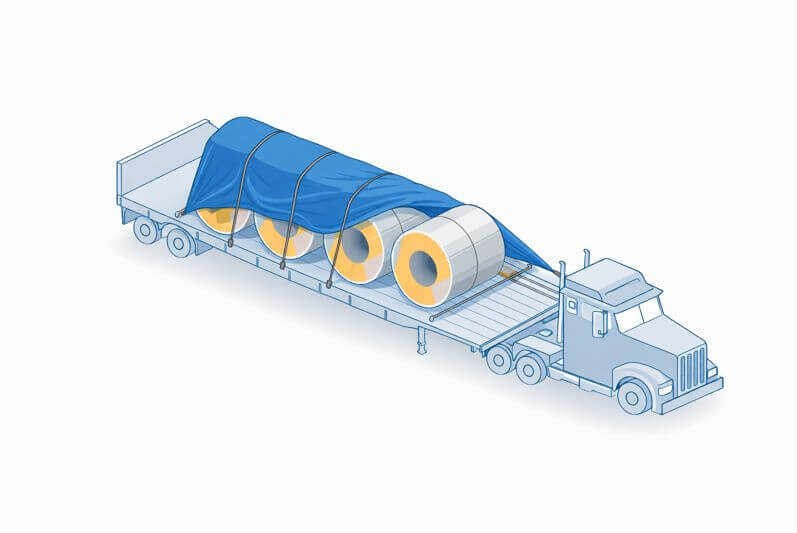
For flatbed or step-deck shipments, tarping and extra securement are common add-ons. They cover the labor and equipment needed to protect freight from the weather and to meet securement standards for heavy or oddly shaped loads.
How carriers bill accessorials
Billing methods vary by carrier, but common patterns include:
- Flat fees per shipment, often used for residential, limited access, trade show, appointment, and hazmat charges.
- CWT-based fees (per hundredweight; formerly known as centum weight), which are common for liftgate, inside delivery, sorting or segregation, and similar labor-intensive services.
- Hourly billing for detention, extra on-site labor, and after-hours work.
- Daily billing for storage and layover when freight cannot move to its next step on schedule.
Adding services after pickup usually means the carrier will apply tariff-based rates, which are often higher than the cost would have been if the same accessorials had been selected while quoting.
Some carriers use automated location categorization
Carriers increasingly use location-intelligence tools and internal data to auto-classify addresses into categories such as:
- Residential
- Limited access
- No-dock
- Restricted access
If a site falls into one of these categories in the carrier’s system, they may auto-apply related charges even if the shipper did not select those services on the quote.
At Freightera, our team uses Rate Defense™ to challenge incorrect or unfair classifications. When the facts support you, Freightera’s Rate Defense™ helps correct misapplied accessorials.
Accessorials and extra services in freight shipping: FAQ
Do I need to pay for a liftgate if we can help unload by hand?
If there is a dock or forklift and pallets can be moved safely without a liftgate, you generally do not need one. If the freight must be lowered to ground level safely and cannot be hand-unloaded without risk, the driver must use a liftgate. The decision is at the driver’s discretion, and they will usually err on the side of caution due to liability reasons.
What is the difference between residential and limited access?
Residential classification is about zoning and neighborhood type. Limited access is about the site’s function and access rules, such as schools, storage units, or secured facilities. Some locations are both residential and limited access (farms, for example), and in those cases, usually the higher fee will apply.
Can I add accessorials later?
Yes, but adding accessorials after pickup is almost always more expensive and can cause delays or redelivery if the original truck or schedule was not suited to the real-world conditions. It is much better to select the needed services upfront.
Why did I get charged for limited access without warning?
Many carriers use their own data and third-party tools to classify addresses. If your site matches their criteria for limited access, they may auto-tag it and apply charges, even if you did not select that option. Declaring the correct location type at quote time makes these costs visible and easier to manage.
Is a home business treated as a residential location?
Yes. Even if you run a full business operation from your home, carriers treat the address as residential because of road access, safety, and local restrictions.
Are accessorials negotiable?
Tariff rates for individual accessorials are usually fixed, but your total all-in cost can still be optimized. With Freightera’s pre-negotiated pricing and Rate Defense™, accessorials stay more predictable.
Freightera Rate Defense™ protects you from unfrair extra charges
At Freightera, our team uses Rate Defense™ to challenge incorrect or unfair classifications. When the facts support you, Freightera’s Rate Defense™ helps correct misapplied accessorials. When your quoted information matches what you actually ship, the rate you book is the rate you pay.