
Shipping Container Sizes, Types and Markings
The main shipping container sizes you’ll see, what they’re for, and how to read the writing on the container box
Most container freight shipping uses just a few standard types of containers.
The main ones are 20’ and 40’ dry containers, and high-cube (HC) versions that are the same length but are one foot taller.
For temperature-sensitive freight, you’ll see refrigerated (“reefer”) containers, and for oversized or oddly shaped cargo, there are open-top or flat-rack containers.
You don’t need to know every container type and size, but it’s helpful to know which size and type you’re using, its approximate capacity, and how to read the markings on the container doors.
The most common container sizes (and when to use them)
You will see many variations, but these five cover most of the containers used in container shipping:
- 20′ standard (20 ft. GP (General Purpose)): Roughly 20 × 8 × 8’6″. Best for dense or heavy freight that hits weight limits before filling the container, such as metal, drums of liquid, or heavy machinery parts. Choose this when weight is the main constraint, not space.
- 40′ standard (40 ft. GP): Roughly 40 × 8 × 8’6″. The default for many ocean moves. Works well for freight with a balanced mix of weight and volume (such as palletized consumer goods; general merchandise).
- 40′ high-cube (40HC): Same footprint as a 40′ standard, about 1 ft. taller (9’6″ external height). Useful for light, bulky freight that fills up the available space before reaching weight limits. Especially helpful when the pallet plus load height is just a bit too tall for a standard container.
- 45′ high-cube (45HC): An extended 40HC used on some trades. Availability and inland road rules vary by corridor and carrier, so it is not offered on every lane.
- 53′ domestic container or trailer: Common in the USA and Canada for inland road or rail moves. Offers more interior space and often slightly more width. In many supply chains, freight is transloaded from 40/40HC ocean containers into 53′ domestic equipment for the inland part of the trip.
Container types: dry, reefer, open-top, flat-rack and more
When you book container freight, most of what you ship will move in one of the standard container types below. Knowing the basics helps you choose the right fit for your cargo.
Dry container (standard box):
- This is the classic steel shipping box with no temperature control.
It is best for palletized or crated dry cargo that does not need heating or cooling.
Reefer container (refrigerated or heated):
- A reefer container has insulated walls and a built-in refrigeration unit that can cool or heat within a controlled temperature range.
- It needs power on the vessel, in the yard, and often via a genset chassis on the road.
- It is used for food, pharmaceuticals, and any other temperature-sensitive products.
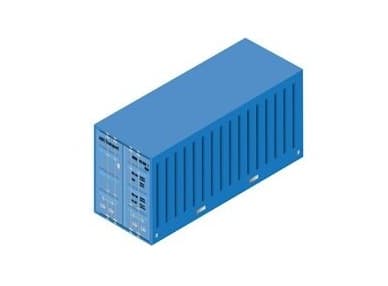
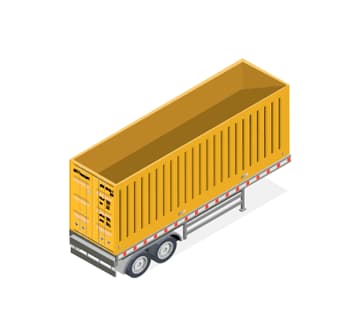
Open-top container:
- An open-top has solid side walls and a removable tarp or hard top so cargo can be loaded from above with a crane.
- It works well for freight that will not fit through standard container doors but still needs side protection.
Flat-rack or platform:
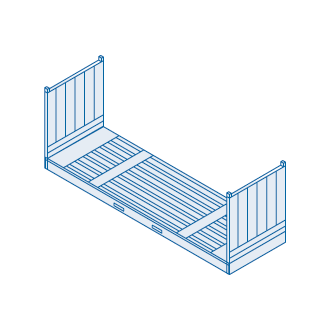
- A flat-rack is a reinforced floor with strong end walls, while a platform is a heavy-duty flat base without walls.
- Both are designed for oversize, oddly shaped, or very heavy cargo and provide strong lashing points for chains and straps.
Domestic 53′ containers vs. ISO ocean containers
For Canada and the USA, 53′ domestic containers are a common choice for inland moves. They are used on both trucks and trains within North America and are designed specifically for domestic road and rail shipments, not for deep-sea shipping.
- How they’re used: 53′ containers typically do not go on deep-sea vessels, so ocean parts of the trip are handled in 20′, 40′, or 40HC units.
- Space and dimensions: They offer more usable interior space (“cube”) than a 40′ or 40HC container and are often slightly wider, which makes them ideal for high-volume but relatively lighter freight.
- How they fit into the chain: A common pattern is to move cargo overseas in a 40′ or 40HC, then transload into a 53′ domestic container at a North American port or rail ramp for inland distribution.
How to read container markings
Here are the basics:
1) Owner code and container number
- Example: ABCD 123456 7.
- The letters identify the owner or the shipping line, the six digits are the serial number, and the final digit is a check digit used by systems to validate the container number.
2) ISO size and type code
- A short alphanumeric code that tells you both the size and type of container (for example, general purpose dry, reefer, or open-top).
- Use this to confirm that the container that arrived is the same type you booked.
3) Weight information
- Max Gross: the maximum combined weight of the container and its cargo.
- Tare: the weight of the empty container.
- Payload / Max CW: the maximum cargo weight you are allowed to load.
- These numbers are critical for staying within road-legal limits and avoiding overweight fines.
4) Cubic capacity (CU. CAP.)
- This is the approximate internal volume of the container.
- It helps you plan how many pallets or cartons will fit.
- The actual usable space is usually slightly less than the printed figure because of internal structures and tolerances.
5) CSC plate and approvals
- A small metal plate near the doors showing that the container meets international safety standards and inspection requirements.
- It confirms that the container is structurally sound and approved for use in international transport.
Container sizes, types and markings FAQ
Do container markings matter inland or only for ocean?
They matter for both. Markings confirm identity and safe loading limits, and help ports, rail, truckers, and warehouses match the right box with the right shipping equipment/truck.
Can I load more in the container than the printed “Max Payload”?
No. The payload on the door is the container’s limit. The load must also meet the road and axle limits of the truck.
What is the real difference between 40' and 40HC containers?
They have the same footprint and doors, but 40HC is one foot taller, and has more internal height and volume for lighter freight.
Need to ship a container?
Share your lane, timing, and unload plan with us at [email protected], and we will compare container-haul and inland FTL options side by side so you can pick the quote that fits your budget and timing.