
Types of FTL Trucks (Dry Van, Reefer, Flatbed…)
How different FTL trailer types work, when to use each, and how to pick the right service for your shipment
Most full truckload (FTL) shipments are shipped in three types of trucks:
- Dry van: standard enclosed trailer
- Reefer: temperature-controlled trailer
- Open deck: flatbed, step-deck, or removable gooseneck (RGN) for tall or odd-shaped freight
The right choice depends on whether your freight needs basic weather protection, temperature control, or open-deck loading and tie-downs.
Here’s a breakdown of the differences between these truck types:
Dry van (standard enclosed trailer)
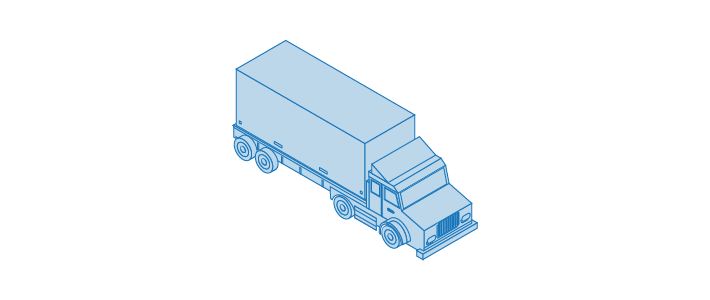
Use a dry van when you’re shipping:
- Palletized, crated, or boxed freight that doesn’t need temperature control
- Goods that just need to stay dry and protected from weather and road debris
- Most retail, consumer goods, ambient food, and general “dry” freight
The most common long trailer in the USA and Canada is a 53 ft. dry van for highway freight.
Use a dry van when your freight is standard-sized, palletized (or crated), and all you need is an enclosed trailer.
Reefer (refrigerated or heated trailer)
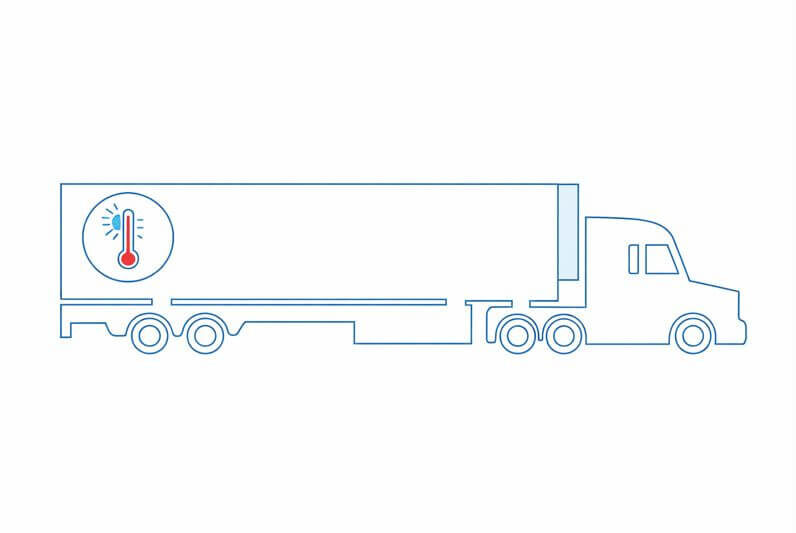
Use a reefer when you’re shipping:
- Freight that must stay within a specific temperature range (chilled, frozen, or protect-from-freeze)
- Products sensitive to temperature changes, such as food, pharmaceuticals, some chemicals, or cosmetics
If you need a reefer, make sure the freight is ready at pickup so the driver can load quickly and keep the doors closed as much as possible. This helps maintain a stable temperature and protects products.
Note that Freightera does not offer reefer services at this moment.
Open deck: flatbed, step-deck, and RGN
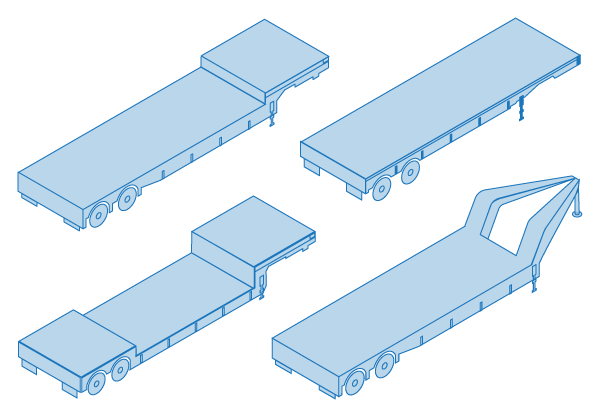
Use open-deck equipment when you’re shipping:
- Freight that is too tall, wide, or long for an enclosed trailer
- Machinery or equipment that needs to be side-loaded or top-loaded by crane or forklift
- Large pieces that must stay upright or don’t fit neatly on pallets
Main open-deck trailer types
1) Flatbed
A flatbed trailer has a straight, level deck from front to back. It’s one of the most common open-deck options because you can load it from the rear, the sides, or even overhead with a crane or forklift.
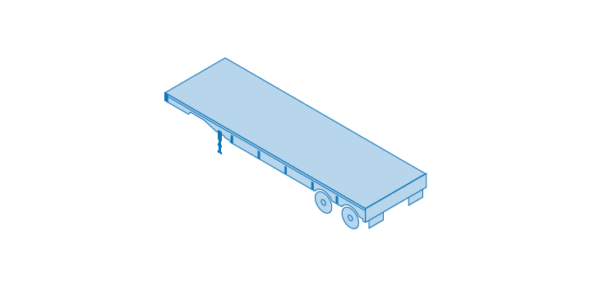
Typical overall loaded height limits in North America are around 13 ft. 6 in. (varies by region), and a standard flatbed deck is usually about 5 ft. off the ground. That means your freight height is more constrained: once you place the load on a ~5 ft deck, you have less room before you hit legal height limits.
Flatbeds are great for palletized, crated, or bundled freight that fits within standard width and height, like lumber, building materials, steel, and machinery that isn’t extremely tall.
2) Step-deck (drop-deck)
A step-deck trailer has two deck levels: a shorter, higher front section and a longer, lower main deck.
The key advantage is height: the lower main deck can sit roughly 12-18 inches lower than a standard flatbed, which gives you extra legal load height before you reach overall road limits.
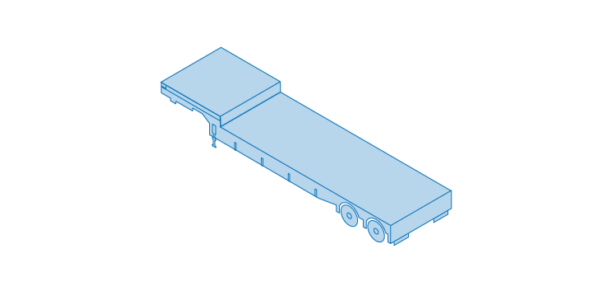
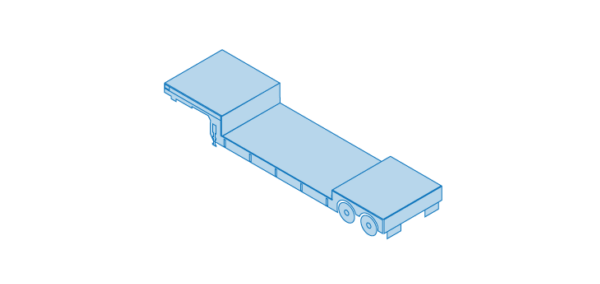
In practice, that means you can move taller machinery, equipment, or crated structures without needing over-height permits as quickly as you would on a flatbed.
Step-decks are commonly used for tall industrial equipment, tractors, construction machinery, and other freight that’s too high for a standard flatbed but doesn’t yet need the extremely low profile of an RGN.
3) RGN (removable gooseneck)
An RGN trailer is designed for the heaviest and tallest loads. The front of the trailer detaches and creates a ramp, so equipment can be driven or rolled directly onto the lower deck from the ground.
The main deck is very close to the road, significantly lower than even a step-deck. This maximizes legal load height and stability for extremely tall or heavy freight.
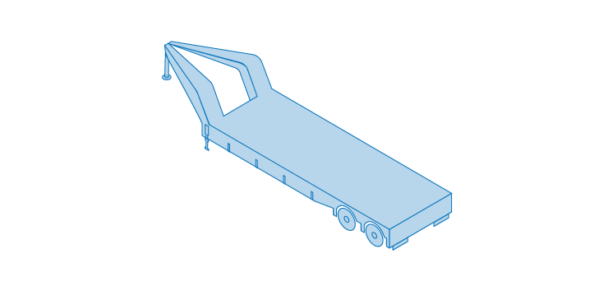
RGNs are typically used for oversize and heavy-haul projects: large construction machines, industrial components, transformers, and other freight that exceeds normal height and weight limits. For example, if you need to ship a truck on a truck, you’d use an RGN.
4) Specialty variants (conestoga / curtain-side / roll-tite)
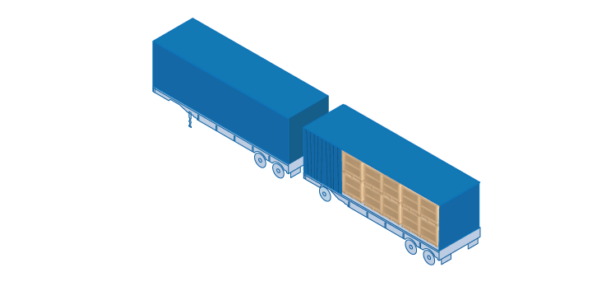
You may also see conestoga / curtain-side (also called China top) / roll-tite flatbeds with a sliding tarp or curtain.
They load like a flatbed (freight can be sideloaded or toploaded), and protect like a dry van (no full tarping needed).
Securement basics
- Open-deck loads are held with straps, chains, binders, and dunnage.
- The driver is responsible for leaving with a legally secured load, but shippers are responsible for presenting well-packaged freight that can be safely tied down.
- Oversize or over-weight loads may require permits, pilot cars, and restricted travel hours, which add planning time and cost.
Axles & legal weights
In the USA federal interstate system, a standard 5-axle tractor-trailer is generally limited to 80,000 lb GVW, although some state limits can be higher. In Canada, limits are usually higher, depending on the route.
Exact rules vary by state or province, and heavier or larger loads usually need permits and sometimes extra axles.
Most oversize/heavy-haul loads are indivisible (you can’t simply split them into smaller legal loads).
Because permits, escorts, and routing have to be planned around the exact size and weight of your shipment, share final dimensions, weight, and any route constraints as early as possible.
This helps your carrier price your freight and schedule the FTL shipment correctly, and reduces the risk of last-minute changes and extra charges.
Types of FTL trucks FAQ
How do I know if I need a reefer instead of a dry van?
If your product has a required temperature range (“keep between X and Y °C/°F” or “must not freeze”), you need a reefer. If it just needs basic weather protection and is fine at room temperature, a dry van is usually enough.
Note that Freightera does not provide quotes for refrigerated trucks at this time.
Can I load a forklift or small machine into a dry van?
Note that Freightera does not provide quotes for refrigerated trucks at this time.
Can I load a forklift or small machine into a dry van?
Sometimes, but only if it fits through the rear door height and width, and if you can load safely by dock or ramp.
If the machine is tall, needs to be craned on, a flatbed, step-deck, or RGN is usually a better and safer choice.
Do I have to tarp my freight on a flatbed?
Only if the freight needs weather protection. Many industrial loads (steel, lumber, certain machinery) don’t need tarps, but anything that can rust, be damaged by rain, or is sensitive to road dirt should be tarped or moved on a conestoga or in a van. If weather protection matters, mention it at quote time so the right trailer and securement are planned.
When should I pick a step-deck instead of a flatbed?
Choose a step-deck when your freight is too tall for a flatbed but you still need an open-deck trailer. The lower main deck gives you extra legal height so you’re less likely to need oversize permits.
How do I know if my freight is “too tall” for a flatbed and needs a step-deck or RGN?
A quick rule of thumb: if your loaded height on a flatbed would put you over legal road height (often around 13 ft. 6 in. total in many regions), you should look at a step-deck or RGN.
Step-decks give you extra height room; RGNs are for the really tall and heavy pieces that clearly won’t fit on a regular flatbed.
When in doubt, share the exact dimensions with us (email us at [email protected]), and we’ll let you know what type of trailer you need.
Who is responsible for securement on flatbeds and other open-deck trailers?
The driver is responsible for leaving with a legally secured load, but you as a shipper are responsible for presenting freight that can be secured safely: strong packaging, good blocking/bracing, etc.
Still not sure which truck you need?
Email your shipment details (what you’re shipping, what the lane is, the exact dimensions & weight, and how the shipment needs to be loaded) to [email protected], and our team can recommend the right equipment.
You can also get FTL quotes on Freightera, compare truck types in your options, and book the one that fits your freight shipping needs!