
Container Ground Shipping
What container freight shipping is, how it works and when to use it
Container ground shipping involves transporting a sealed container between a port or a rail yard and your location. A truck with a chassis picks up the container at the terminal, brings it to your warehouse or DC so you can unload, and then returns the empty container to the correct depot before free time runs out.
In this guide, you’ll learn how container freight shipping works and what to expect. We’ll also cover when it’s better to move the container intact instead of transloading into a domestic truck, the most common pitfalls to watch for, and when container ground shipping is the right fit for your freight.
How container freight shipping works, step by step
1) Make sure the container gets released before the truck is dispatched
Always confirm whether the container is released and ready to be shipped before the truck is dispatched. For imports, a box usually cannot leave the terminal until:
- Customs is cleared;
- All port / storage / line fees are paid;
- You have a release number or trip number from your broker or the steamship line.
If there is any hold, the truck will be turned away at the gate.
2) Book a port-cleared carrier
Not every trucker can enter a port or rail ramp.
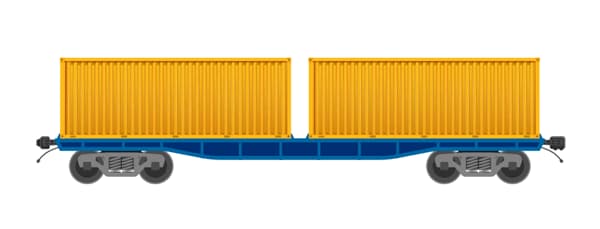
You need a carrier that is registered with that port, and has access to the correct chassis (a chassis is the wheeled trailer frame that the container sits on, so a truck can haul it).
If you book through Freightera, we can help you choose a port-cleared carrier with the right chassis and equipment for your specific container, route, and timing.
3) Arrange a terminal appointment and pickup
Many ports and rail terminals run on appointment systems or strict time windows, which means your driver must arrive during the assigned slot. Missing that window can cause delays or force a reschedule.
At the terminal gate: The driver checks in, confirms the container number, and waits for instructions. Terminal staff then locate and assign the container, move it from the stack, and lift it onto the correct chassis (standard, tri-axle, or genset, depending on your load).
Expect possible delays: Terminals (especially busy ports) can have long queues, congestion, or slow crane operations, which add time to the process. This extra time often results in wait time charges, so it’s important to plan ahead, book early, and follow the carrier’s recommended pickup windows to minimize cost.
4) Ship the container to your site
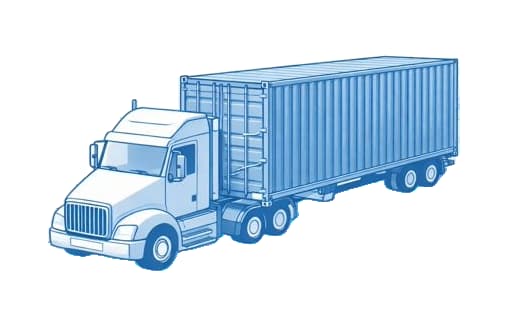
After the container is mounted, the driver completes outbound inspection, secures the container, and exits the terminal to begin the run to your site.
At this stage, the move functions much like an FTL shipment.
5) Unload within free time
You will have a certain number of “free days,” which are the days you can store the container at the terminal (or keep the container and chassis out on the street) before extra charges start.
To avoid demurrage, detention, or per diem charges, have the dock, staff, and equipment ready, and unload the container as soon as possible.
6) Return the empty container
After unloading, the carrier returns the empty container to the designated depot or terminal.
Make sure to provide clear return instructions to avoid fees caused by returning the empty container to the wrong location or having to drive an extra distance.
When to haul the container intact and when to transload to a truck
You have two inland options for shipping your container: move the container intact, or transload the contents of the container to a truck.
When to ship the container intact
Ship the container intact when:
- Your freight is hard to palletize or should remain as-is: This option works best when the cargo is loose, irregularly shaped, fragile, or not suited for palletizing or repacking.
- You want a seal-intact move from port/ramp to your door: The container’s seal is placed at origin and remains unbroken until it reaches your site, which reduces handling, risk of loss, and chain-of-custody issues.
- Your location is reasonably close to the port or rail ramp: Hauling the container long distances keeps the equipment out for extended periods, which increases detention, per diem, and storage fees.
- Your facility can safely receive a container on a chassis: You have enough space, access, and appropriate equipment (a dock or a forklift) to unload directly from a container.
When to transload the container into FTL or LTL
Transloading is the better choice when:
- The final destination is far inland: Moving the container long distances keeps equipment out for too long and increases the risk of detention, per diem, and storage charges. Transloading reduces exposure to these costs.
- You need to split or consolidate freight: Transloading is ideal when the contents must be divided to multiple destinations or combined into a single domestic truck for onward distribution.
- The destination cannot accommodate a container on a chassis: This applies to sites with tight access, no yard space, no dock, uneven surfaces, or locations that a 53′ trailer or container simply can’t reach safely.
Container freight shipping FAQ
Do I have to wait until my container is “released” before I book a truck?
You can book a truck in advance, but the container must be fully released before the truck is dispatched. If there’s a hold, the driver will be turned away at the terminal, and you may still be charged for the attempt or waiting time. The safest approach is for the truck to be dispatched only after your broker confirms the container is cleared and officially released.
Is “drayage” different from normal trucking?
Yes. Drayage is the short-haul movement of a loaded container between a port or rail terminal and a nearby warehouse, distribution center, or yard. It requires a port-cleared carrier, the correct chassis, and compliance with terminal rules such as appointments, queues, and return cutoffs.
How much time do I have to unload the container?
It varies by steamship line, terminal, and contract. There are free days at the terminal and a free period with the equipment outside the terminal. It’s best to ask your broker for the exact time limits.
Can I keep the container at my site for storage?
You can, but you will usually pay per diem for the container, and sometimes for the chassis. If you need storage, it is often cheaper to unload into your own space or rent a separate storage container.
What if my warehouse cannot take a container on a chassis?
Plan to transload at a nearby warehouse and send the freight inland on a regular truck that can access your site.
Need to ship a container?
Share your lane, timing, and unload plan with us at [email protected], and we will compare container-haul and inland FTL quotes side by side so you can pick the option that works for you.