
How to Avoid Extra Fees in Container Ground Shipping
The most common extra charges in container ground shipping, and how to prevent them
Port-to-door container shipping (drayage) is where many importers run into their highest unexpected costs, often because of issues with timing, access, or paperwork.
Even when a move is carefully planned, container shipping still comes with predictable risks, and understanding these upfront makes it much easier to prevent delays and surprise charges.
This guide walks through the most common mistakes that lead to demurrage, detention, and per diem fees, explains how to avoid them, and shows what a smooth, well-managed container move should look like from start to finish.
Drayage and time-based fees in container shipping
Drayage is the short-haul truck move between a port or rail terminal and your warehouse, distribution center, or yard, plus the return of the empty container to the steamship line’s designated depot.
These are the most common time-based fees that can show up during drayage:
- Demurrage: Demurrage is a daily fee the terminal charges when a container stays inside the port or rail terminal past its free days.
- Detention: Detention is an hourly or daily fee charged when the container is kept too long at your site during unloading.
- Per diem: Per diem is a daily rental fee for keeping the container (and sometimes the chassis) out past the agreed return cutoff.
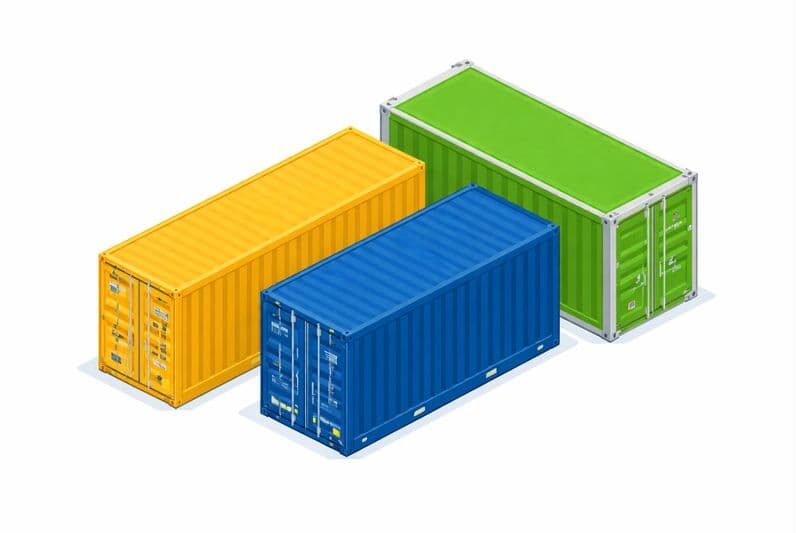
Common mistakes that cause extra container shipping fees
In this section, we’ll walk through the most common mistakes shippers make with port-to-door container shipments, what each one typically ends up costing you, and how to avoid those charges.
1) Having the truck dispatched before the container is released
If the truck is dispatched before the container is actually released, this mistake can lead to demurrage (a daily fee for containers that sit too long inside the terminal) and failed pickup fees (charges for attempted pickups where the carrier can’t move the container).
Each container has to be customs-cleared and fully released (with all port and line fees paid) before a truck can pick it up.
If the carrier arrives at the terminal while the box is still on hold, they will be turned away, and if release takes longer than expected, free days at the terminal can expire, and demurrage will start.
Example:
Your vessel arrives on Monday. You expect customs to clear by Tuesday, and you book a truck for Wednesday. Instead, clearance finishes late Thursday. Free time at the terminal was Monday-Wednesday, so by Thursday, the container is already accruing demurrage, and you may receive a failed pickup fee for the truck dispatched on Wednesday.
How to avoid this:
- Start the customs clearance process early and give your broker all required documents in advance.
- Know exactly which terminal or rail ramp your container will discharge at, so that you and your broker are working with the correct location, rules, and free-time dates.
- Confirm in advance who is responsible for paying port, terminal, and steamship line charges so payment does not delay the container’s release.
- Pay all port, storage, and steamship line charges as soon as they are invoiced.
- You can book the truck well in advance, but make sure it’s not dispatched before you have a written confirmation that the container is fully released.
- Ask for your Last Free Day (LFD) at the terminal so you know the exact date when demurrage will begin if the container is not picked up in time.
2) Wrong access or location assumptions
If you assume a container can be delivered anywhere without checking location access, this mistake can result in failed delivery fees (charges for attempted deliveries that cannot be completed), extra local trucking costs, and schedule delays.
Not every site can accommodate a container on a chassis. Tight entrances, limited yard space, low clearances, steep or uneven ground, or the absence of a dock can make delivery unsafe (or impossible).
Example:
You schedule the container directly to a small urban warehouse with a narrow alley and overhead cables. The driver arrives, cannot turn the truck safely, and has to cancel the delivery. You are charged for the failed attempt and must now arrange transloading via a different location.
How to avoid this:
- Check the site in advance using Google Maps, photos, and a quick phone call.
- Ask someone on-site whether a container on a chassis (or a 53′ truck) can get in and out safely.
- If not, plan to move the container to a nearby warehouse for transloading, then send the freight inland via standard FTL or LTL where needed.
3) Underestimating terminal congestion
Ports and rail ramps often have heavy congestion, appointment systems, and queues. The extra time the driver spends waiting at the terminal is frequently billed once free time is used up.
Not planning for this in advance can lead to wait time charges.
Example:
You schedule the pickup for a late slot, and several vessels arrive around the same time. Your driver ends up waiting an extra two hours just to get into the terminal and have the container mounted on a chassis, and the carrier charges those additional hours as billable wait time.
How to avoid this:
- Book drayage early, especially in busy ports and peak seasons.
- Avoid known peak days when possible (for example, right after large vessel arrivals or holidays).
4) Warehouse not ready / slow unloading
If your warehouse is not ready to unload when the driver arrives, this mistake can result in detention charges and sometimes a layover fee, which is an additional fee because the driver has to wait for an extended period.
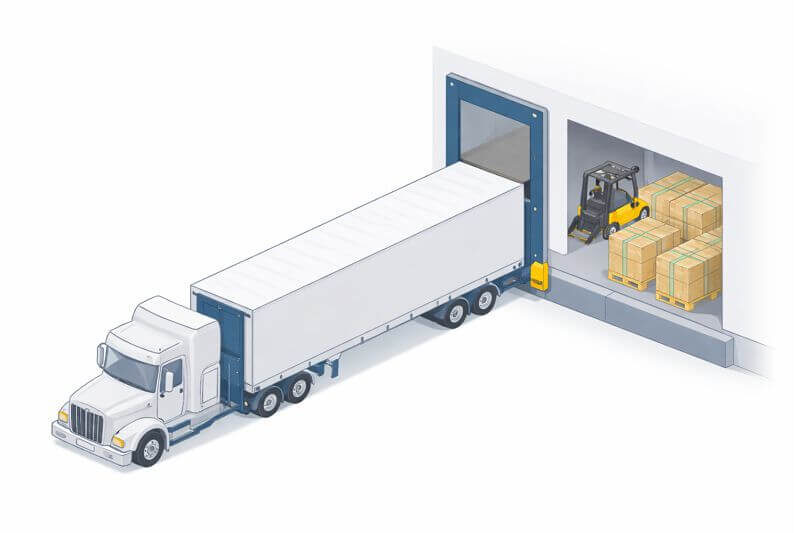
Drayage carriers typically include 1-2 free hours on-site. If unloading doesn’t start promptly or takes much longer than planned, free time runs out, and detention begins.
Example:
The driver arrives at 10:00 a.m., but your team can’t start unloading until 11:00 a.m. Unloading then takes 2.5 more hours. With 2 hours free included, you are billed for 1.5 hours of detention.
If the delay pushes the driver past their next appointment or Hours of Service limits, they may need a second trip, with an additional layover fee.
How to avoid this:
- Schedule delivery only when a dock, staff, and equipment are definitely available.
- Assume unloading will use the full free window and allow buffer time.
- Pre-stage space and equipment (e.g. forklift) so unloading can start immediately and finish within the free time.
- Keep a person available on site to answer driver questions and sign any required paperwork so unloading is not delayed.
5) Using the container as “temporary storage”
If you keep the container loaded at your site for convenience, this mistake can trigger per diem charges, and sometimes equipment detention if the chassis remains tied up at your location.
Ocean containers and their chassis are designed to move, not to act as low-cost storage. Keeping the box out past its free days quickly becomes expensive.
Example:
You receive the container on Monday, but decide to unload it slowly over the week. The steamship line gives you two free days off-terminal. By Thursday, the per diem clock is already running, and by the time the empty container is returned, you have several days of per diem charges plus possible chassis detention.
How to avoid this:
- Plan to unload the container as soon as it arrives, not later in the week.
- Treat the container as a high-cost asset that must be unloaded and released quickly, not as spare warehouse space.
6) Missing the return cutoff / sending the empty container to the wrong depot
If the empty container is returned late or to the wrong depot, this mistake leads to additional per diem charges and extra local trucking costs for moving the container to the correct location.
Every container has a designated return depot and a return cutoff time. Returning the empty container after that time (or to the wrong location) means per diem continues to accrue until it is properly gated in, and further trucking is required to correct the mistake.
Example:
You finish unloading at 4:00 p.m., but the return depot’s cutoff was 3:30 p.m. The driver cannot gate in the empty container until the next business day, adding another day of per diem. Or the driver gates in at Depot B, only to be told the steamship line assigned Depot A. They now need to move the empty container again across town, while per diem continues until it is gated in at the correct location.
How to avoid this:
- Confirm the correct return depot and cutoff time before the move.
- Release the empty container to the carrier immediately after unloading.
- If a charge looks wrong, request gate-out and gate-in timestamps to see when and where the equipment actually moved, and dispute questionable fees quickly because adjustment windows are usually short.
How to avoid extra fees in container ground shipping FAQ
Who usually gets billed for demurrage, detention, and per diem?
It depends on contracts, but invoices typically go to the party listed on the ocean documents (such as the forwarder, NVOCC, or importer of record) and are then passed through. Clarify bill-to responsibilities before the shipment moves.
Does booking early guarantee I will avoid fees?
Booking early helps, but it is not enough on its own. You still need a timely release, correct free-time information, a realistic unloading plan, and a site that can physically accept the container.
How far in advance should I book drayage from the port or rail ramp?
For most lanes, booking a few days in advance is enough, but in busy seasons or very tight markets, it’s safer to book as soon as you know the ETA and expect release before your Last Free Day. The key is to line up a carrier early, but only confirm the actual pickup once the container is released and you have a realistic unload plan.
What information do I need to give the drayage carrier up front?
At minimum: container number, steamship line, terminal/ramp, release or trip number, Last Free Day, pickup and delivery addresses, contact info on site, and any access constraints (tight yard, no dock, appointment required, etc.). The clearer your instructions, the lower the chance of surprise fees.
How do I know if I should keep the container intact or transload it into a truck?
If your site is close to the port/ramp, can handle a container on a chassis, and you want a seal-intact move, keeping the container intact often makes sense. If the final destination is far inland, has tricky access, or you need to split or consolidate freight, it’s usually cheaper and safer to transload at a nearby warehouse and ship inland on standard FTL or LTL.
What happens if my container isn’t released by the time I planned to pick it up?
If the container is still on hold when your scheduled pickup day comes, the truck cannot legally move it. You may be charged for a failed attempt if the carrier has already dispatched a driver, and if release takes longer than your free days, demurrage will start. Always build in a buffer and reconfirm release status before the truck is dispatched.
Can I ask for more free time so I don’t get hit with fees?
Sometimes. Extra free days at the terminal or with the equipment are a commercial point you can negotiate with your forwarder, carrier, or steamship line before the shipment moves. Once the clocks start, it’s much harder to change them, so ask about free-time options and costs at the quoting or booking stage, not after fees appear.
Do you have a container arriving soon?
Share the shipping details with us at [email protected].
We’ll line up port-cleared carriers and let you compare drayage and inland truck options so you can choose the one that works best for your business.