
Planning, Operations, and Safety in FTL Shipping
How to plan timelines, prepare sites, and secure cargo so your full truckload runs on time
Once you’ve decided that full truckload (FTL) is the right mode for your shipment, good outcomes mostly come down to two things:
- Planning the real-world details of the shipment (where, when, how the shipment will be loaded/unloaded, and what equipment this requires, and who will be ready on-site);
- Respecting what’s physically and legally possible on the road (driver Hours of Service rules, weather, and route restrictions).
When those pieces line up, you greatly reduce the odds of detention, layovers, redelivery, damage, and last-minute rebooking.
1) Plan a realistic timeline around Hours of Service (HOS)
In North America, truck drivers can’t just drive “until it’s done.”
In the USA, most drivers can drive up to 11 hours within a 14-hour work window. Federal Hours of Service rules limit how long they can work and drive each day and week.
In Canada, drivers generally may drive up to 13 hours in a day (within a 16-hour work window).
Why this matters for you:
- Daily miles are capped. You can’t plan a 900-mile same-day run and assume the driver will “make up time later.” A rough estimate of 500 miles/day is a safe bet.
- Delays affect the legal day. Long loading, traffic, or missed appointments can cause the driver to “time out,” which can push delivery to the next day.
Pro tip: Before you quote, build a workable schedule
- Quote and book a few days ahead when you can. Aim for 4-7 days of lead time, especially for reefers, flatbeds, and oversized loads. This gives carriers room to plan equipment and routing.
- Avoid very late-day pickups. If loading runs long, you can hit the HOS duty limit and force a layover.
- Declare appointment needs early. Distribution centres, food receivers, and high-security sites often require booked time windows.
If you often ship on very tight schedules, build that into the plan instead of hoping for “perfect conditions.”
Team / expedited FTL (for hard deadlines)
When delivery absolutely needs to make it on a tight schedule, some lanes support team or expedited FTL: two drivers share the same truck so it can legally stay moving longer under HOS rules.
- This costs more than standard solo-driver service.
- It can be the right tool for must-arrive dates, retail resets, launch events, or production-line shutdown risks.
If you’re working with very tight windows, ask early whether team/expedited service is available on your lane.
2) Get your pick up and delivery locations ready: loading, staffing, and access
Most operational problems in FTL shipping come from what happens at the dock and at the gate, not on the highway. Good site prep keeps trucks moving and protects your schedule.
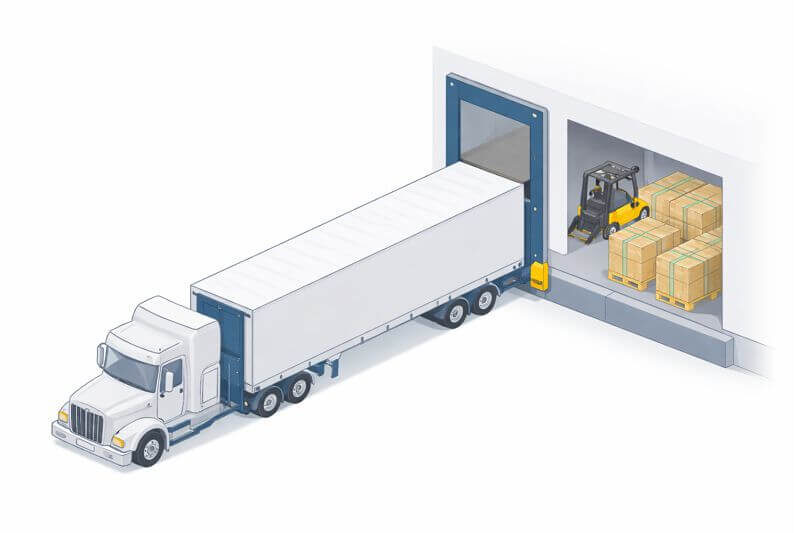
Make loading/unloading fast and predictable
- Pre-stage freight. Prepare it and have it near the loading area.
- Have labor and equipment ready. Forklifts, cranes, and dock staff should be ready at the scheduled time.
- Keep access clear. Make sure the truck can find the entrance, turn, and back into the dock without moving other vehicles first.
Extra time at the location affects the driver’s legal working day, which can lead to delays or extra charges if it gets out of hand.
Remove “mystery” from pickup and delivery locations
Share practical details on the BOL while booking the freight:
- Gate codes, security procedures, and check-in instructions
- Dock numbers or yard directions
- Lunch breaks, shift changes, and days closed
In other words, if there’s anything that might restrict drivers’ access to the location, or their ability to show up and load/unload during regular business hours, make sure to note it. Missing details here are a common reason for missed pickups, redeliveries, and schedule slips.
3) Cargo securement basics for shippers
The cargo securement standards in some states in the USA and some provinces in Canada require enough securement (straps, chains, etc.) so that cargo cannot move in a way that affects vehicle stability or control.
Legally, drivers must leave with a load that won’t shift, tip, or fall. In practice, they can’t fix freight that was packed poorly in the first place.
Your core responsibilities as a shipper:
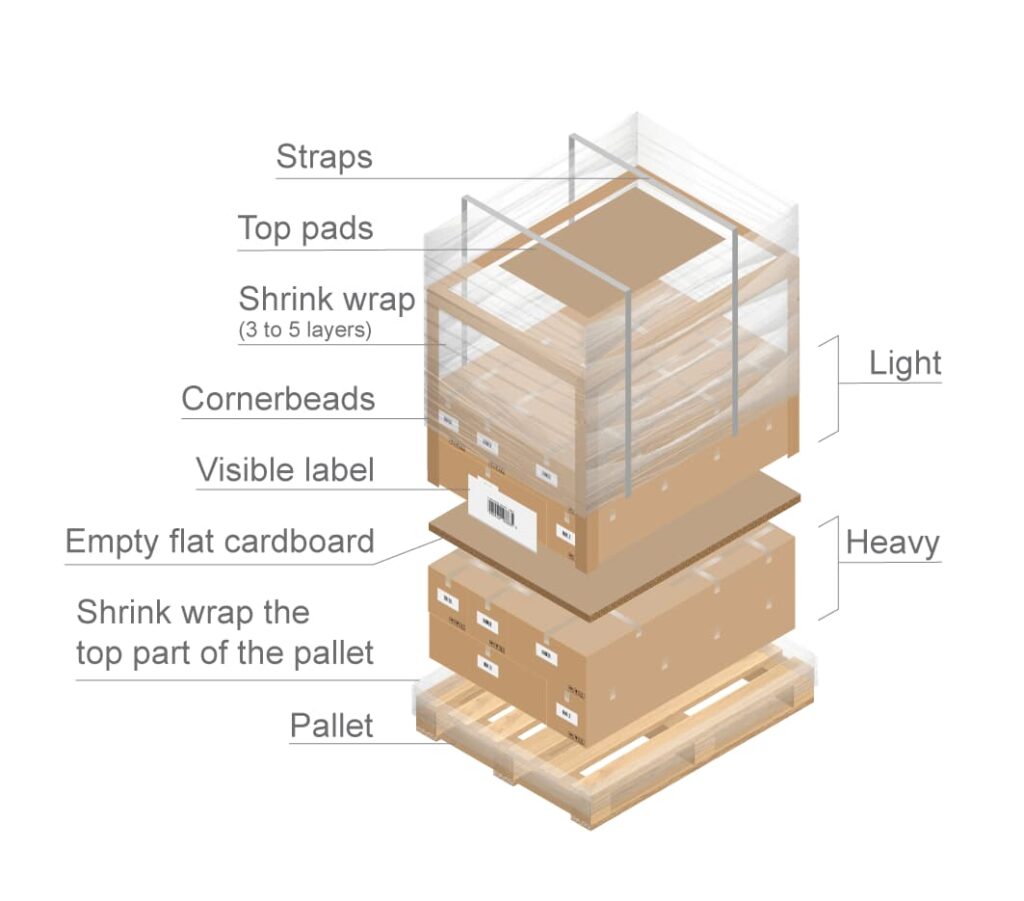
- Package the shipment well enough to survive normal transport forces
- Give accurate weight and dimensions while quoting. Securement planning and legal axle loading depend on real numbers.
Open-deck trailers (flatbed, step-deck, RGN)
For open-deck shipments, rules set minimum numbers and strengths of tiedowns. You don’t need to keep track of all the regulations, but you do need to:
- Present freight that can handle strap or chain pressure without getting crushed.
- Depending on the cargo volume, it should also be able to handle the weight of another pallet placed on top of it (stackable).
- Provide real structure for freight securement (frames, blocking, built-in lugs), not thin sheet metal.
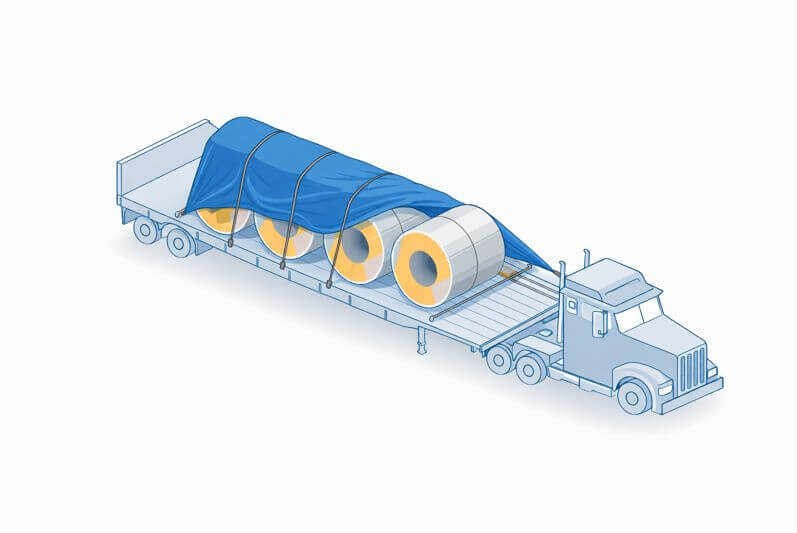
- Approve tarping and any special securement needs in the quote if the load needs weather protection or extra gear.
Oversized and heavy-haul
For oversize or heavy-haul loads, most jurisdictions treat these as indivisible loads and require permits and sometimes escorts.
Accurate weight, dimensions, and securement needs are a must: they’re what your carrier uses to design a legal securement plan and get permits approved on time.
4) Weather and seasonal planning for FTL
The weather is a major cause of highway delay. It affects ETA and routing.
Winter: freeze risk, snow, and short days
- Use heated service or reefer heat for freight that must not freeze.
- Plan for extra time around major storms; avoid very tight late-day pickups when road traffic may slow down. Some corridors issue wind/ice closures for vehicles, so trucks may be temporarily held or rerouted.
Summer: heat, wildfires, and storms
- For heat-sensitive freight, use reefer cooling.
- Expect detours or slowdowns during wildfire, flood, or hurricane seasons; capacity can tighten when carriers avoid certain regions.
Rail FTL as a planning tool
On lanes that support it and where your delivery window is flexible, consider shipping rail / intermodal FTL.
This prevents exposure to highway closures, reduces exposure to major storms, and may lower the total cost of your shipment.
Planning, operations, and safety in FTL freight shipping FAQ
What happens if my FTL pickup or delivery takes longer than planned?
If loading or unloading runs long, it can push the driver past their legal Hours of Service limit. When that happens, the driver may be required to stop and resume the trip the next day, which can delay delivery. Extended on-site time can also trigger detention charges. Planning realistic appointment windows and having labour and equipment ready helps prevent these issues.
Do I need to worry about cargo securement if I’m shipping a full truckload?
Even though the carrier handles the actual securement, the shipper is responsible for providing freight that can be safely secured. That means accurate weights and dimensions, packaging that can withstand straps or chains, and structural integrity suitable for the trailer type. Poorly packaged freight can lead to delays, rework, or refusal at pickup.
Is standard FTL suitable for strict delivery deadlines?
Standard solo-driver FTL works well for most schedules, but it may not be enough for hard deadlines on long lanes. In those cases, team or expedited FTL (where two drivers drive the truck, switching at intervals) can keep freight moving longer within legal limits. This option costs more but can be a good option for time-sensitive shipments.
Ready to ship FTL?
Send your lane, timing, and equipment needs to [email protected], and our team will help you build a realistic shipping plan so your FTL shipments run on time with fewer surprises. Or simply get an FTL quote online.